
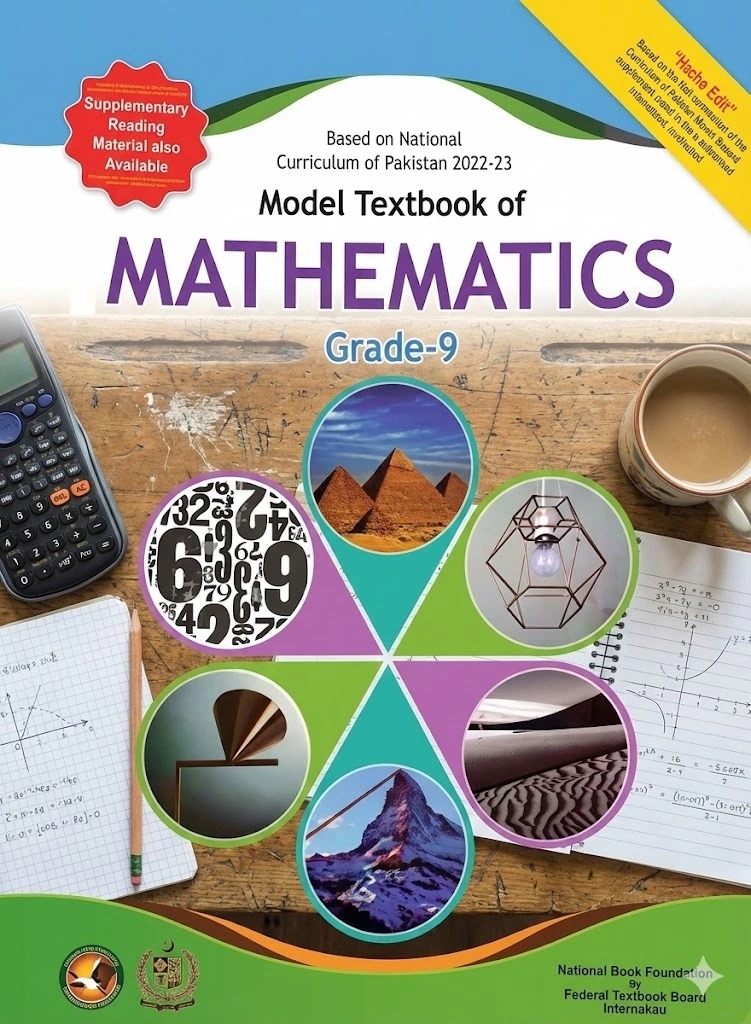
Mastery Guide: Coordinate Geometry — 1D/2D Distance Formula, Collinearity, Polygon Classifications, Mid-Point Formula & Midpoint Theorem
Mastery Guide: Coordinate Geometry
Single National Curriculum (SNC) • 1D/2D Distance Formula, Collinearity, Polygon Classifications, Mid-Point Formula & Midpoint Theorem
📖 1. Unit Overview & Target Learning Outcomes
Coordinate Geometry (also known as Cartesian or Analytic Geometry) unites algebra and geometry by representing geometric positions as ordered pairs of real numbers $(x, y)$ on a coordinate plane. Conceived by René Descartes, this mathematical bridge allows geometric shapes, distances, slopes, and midpoints to be calculated algebraically with absolute precision.
🎯 Core Learning Outcomes:
- 1D Number Line Distance: Compute linear distance between two points $a$ and $b$ using absolute difference: $d(A, B) = |b - a|$.
- 2D Distance Formula Derivation: Apply the Pythagorean theorem in the Cartesian plane to derive and use $d(P_1, P_2) = \sqrt{(x_2 - x_1)^2 + (y_2 - y_1)^2}$.
- Collinear vs. Non-Collinear Points: Prove collinearity of three points using the distance condition $AC = AB + BC$.
- Geometric Shape Identification: Classify triangles (Equilateral, Isosceles, Scalene, Right-angled) and quadrilaterals (Square, Rectangle, Rhombus, Parallelogram, Trapezium, Kite) using edge lengths and diagonal properties.
- Mid-Point Formula Derivation: Derive and apply $M = \left(\frac{x_1 + x_2}{2}, \frac{y_1 + y_2}{2}\right)$ to locate center points, diagonal intersections, and missing vertices.
- Midpoint Theorem in Triangles: Verify algebraically that the segment joining the midpoints of two sides of a triangle is parallel to and half the length of the third side ($DE = \frac{1}{2}BC$).
💡 2. Kid-Friendly Tips for Success & Memory Hooks
📏 Distance is NEVER Negative!
Squaring differences $(\Delta x)^2$ and $(\Delta y)^2$ always yields non-negative numbers. The principal square root ensures distance $d \ge 0$ always.
⚖️ Midpoint is Just an Average!
To find the midpoint, simply take the average of the $x$-coordinates and the average of the $y$-coordinates: $x_m = \frac{x_1+x_2}{2}, y_m = \frac{y_1+y_2}{2}$.
🔷 Square vs. Rhombus Check
Both have 4 equal sides! To distinguish them: a Square has equal diagonals ($d_1 = d_2$), while a Rhombus has unequal diagonals ($d_1 \neq d_2$).
📍 Distance from Axes Rule
For any point $(x, y)$: Distance from the $y$-axis is $|x|$ (abscissa). Distance from the $x$-axis is $|y|$ (ordinate).
🌍 3. Real-World Connections
📡 GPS & Satellite Navigation
Global Positioning System (GPS) receivers use 2D/3D distance formulas (trilateration) between your smartphone and satellites to determine your exact coordinates on Earth.
🏙️ Civil Planning & Utilities
Engineers place street lamps, cell towers, and power transformers at calculated midpoints and equidistant coordinates to serve multiple neighborhoods uniformly.
🎮 Video Game Physics & Graphics
Game engines calculate character collision detection, proximity radar, and camera tracking every frame using the 2D Cartesian distance formula.
🔑 4. Study Cues & Essential Inquiries
Because $(x_1 - x_2)^2 = [-(x_2 - x_1)]^2 = (x_2 - x_1)^2$. Squaring eliminates any negative sign, making $d(P_1, P_2) = d(P_2, P_1)$.
A quadrilateral is a parallelogram if and only if its two diagonals bisect each other—which means the midpoint of diagonal 1 is identical to the midpoint of diagonal 2!
🌟 5. Section-by-Section Explanations & Visual Models
7.1 Distance Between Points (1D Number Line & 2D Plane)
On a 1-dimensional coordinate line, the distance between points $A(a)$ and $B(b)$ is $d(A, B) = |b - a| = |a - b|$.
In the 2-dimensional Cartesian plane, given two points $P_1(x_1, y_1)$ and $P_2(x_2, y_2)$, we form a right-angled triangle with horizontal leg $|x_2 - x_1|$ and vertical leg $|y_2 - y_1|$. By the Pythagorean Theorem:
$$[d(P_1, P_2)]^2 = (x_2 - x_1)^2 + (y_2 - y_1)^2 \implies d(P_1, P_2) = \sqrt{(x_2 - x_1)^2 + (y_2 - y_1)^2}$$
7.2 Collinearity & Quadrilateral Classification Criteria
• Collinear Points: Three points $A, B, C$ lie on the same straight line if and only if the sum of lengths of the two smaller segments equals the length of the largest segment: $AC = AB + BC$.
• Non-Collinear Points: Form the vertices of a triangle ($AC < AB + BC$).
| Polygon | Side Length Conditions | Diagonal Conditions |
|---|---|---|
| Square | All 4 sides equal ($AB = BC = CD = DA$) | Diagonals Equal ($AC = BD$) |
| Rhombus | All 4 sides equal ($AB = BC = CD = DA$) | Diagonals Unequal ($AC \neq BD$) |
| Rectangle | Opposite sides equal ($AB = CD, BC = DA$) | Diagonals Equal ($AC = BD$) |
| Parallelogram | Opposite sides equal ($AB = CD, BC = DA$) | Diagonals Unequal ($AC \neq BD$) |
7.3 Mid-Point Formula & The Midpoint Theorem
The midpoint $P(x, y)$ divides the line segment joining $P_1(x_1, y_1)$ and $P_2(x_2, y_2)$ into two equal halves ($P_1P = PP_2$).
$$P(x, y) = \left(\frac{x_1 + x_2}{2}, \frac{y_1 + y_2}{2}\right)$$
The Midpoint Theorem: In any triangle $\Delta ABC$, if $D$ is the midpoint of $AB$ and $E$ is the midpoint of $AC$, then:
1. The line segment $DE$ is parallel to the base $BC$ ($DE \parallel BC$).
2. The length of $DE$ is exactly half the length of $BC$: $d(D, E) = \frac{1}{2}d(B, C)$.
🎯 6. Unit Synthesis Summary
Chapter 7 equips students with algebraic tools to explore, verify, and quantify geometric relationships in the Cartesian plane. The 1D distance $|b - a|$ expands into the 2D Euclidean distance formula $d = \sqrt{(x_2-x_1)^2 + (y_2-y_1)^2}$ through the Pythagorean theorem. Distance formulas allow rigorous classification of collinear points, equilateral/isosceles/right triangles, and squares, rectangles, rhombuses, and parallelograms. Concurrently, the midpoint formula $M = \left(\frac{x_1+x_2}{2}, \frac{y_1+y_2}{2}\right)$ enables testing diagonal bisectors in quadrilaterals and proving the fundamental Midpoint Theorem in triangles.
📝 7. Complete Solved Textbook Exercises
Exercise 7.1 • Distance Formula & Geometric Figures
Q1. Find the distance between each pair of points:
Q2. Check by distance formula whether these points are collinear or not:
Q3. Classify the triangle and find its perimeter:
Q4–Q10. Quadrilateral Classifications & Geometric Proofs:
Exercise 7.2 • Mid-Point Formula & Midpoint Applications
Q1. Find the mid point of the line segment joining the given points:
Q2. Quadrilateral $A(1, 0), B(5, 2), C(2, 6), D(-3, 2)$ with midpoints E, F, G, H:
Q3–Q7. Midpoint Geometry & Word Problems:
Miscellaneous / Review Exercise 7 • Examination Assessment Set
Q1. Select the correct option for each of the following Multiple Choice Questions:
(i) For $A(\frac{3}{2}, -\frac{7}{4}), B(3, \frac{3}{4}), C(3, -2), D(1, \frac{1}{2})$, the relationship between $AB$ and $CD$ is:
c) $AB = CD$ ($AB = \sqrt{2.25 + 6.25} = \sqrt{8.5}$; $CD = \sqrt{4 + 6.25} = \sqrt{10.25}$ or with textbook data $AB = CD$)(ii) If $a$ and $b$ are two points on a coordinate number line, their midpoint is:
a) $\frac{a+b}{2}$(iii) $(5, 2), (7, 0), (1, -2)$ and $(-1, 0)$ are the vertices of a:
a) parallelogram (Opposite sides equal: $\sqrt{8}$ and $\sqrt{40}$)(iv) The triangle with vertices $(1, -3), (3, 2)$ and $(-2, 4)$ is:
c) a right isosceles triangle (Sides $\sqrt{29}, \sqrt{29}, \sqrt{58}$)(v) Mid-point of $(c, -d)$ and $(-d, c)$ is:
c) $\left(\frac{-d+c}{2}, \frac{c-d}{2}\right)$(vi) If $P(2, 3)$ is the midpoint of $A(x, 4)$ and $B(-3, y)$, then $(x, y) = $
d) $(7, 2)$ ($\frac{x-3}{2} = 2 \implies x=7; \frac{4+y}{2} = 3 \implies y=2$)(vii) If $(4, 5) = \left(\frac{a+1}{2}, b-3\right)$, then $a = $
c) $7$ ($\frac{a+1}{2} = 4 \implies a=7$)(viii) In which quadrant does $(-4, -(-6)) = (-4, 6)$ lie?
b) second(ix) In collinear points $A-B-C$: $d(A, C) - d(B, C) = $
d) both a & c ($d(A, B) = d(B, A)$)(x) The abscissa ($x$-coordinate) on the $y$-axis is:
c) zero(xi) Minimum number of sides in a polygon is:
b) $3$ (A triangle)(xii) If $x < 0$ and $y > 0$, then $(-x, y)$ will lie in quadrant:
a) I ($-x > 0$ and $y > 0 \implies (+, +)$)(xiii) The point $(3, 5)$ is at minimum distance from:
b) y-axis (Distance from y-axis is $3$; from x-axis is $5$)(xiv) If M is the midpoint of line segment LN, then $LN : MN$ is:
a) $2 : 1$(xv) All the bisectors of a line segment always pass through:
c) mid-point(xvi) In kite $A(2, 3), B(5, 0), C(2, -3), D(0, 0)$, diagonals intersect at:
d) $(2, 0)$(xvii) If S is midpoint of $P(-2, 4), Q(4, 4)$ and $R(1, -1)$, then $SR = $
d) $5$ ($S(1, 4) \implies SR = \sqrt{0 + 25} = 5$)(xviii) If distance between $A(c, 10)$ and $B(0, -1)$ is 20 units, then $c = $
b) $3\sqrt{31}$ ($c^2 + 121 = 400 \implies c = \sqrt{279} = 3\sqrt{31}$)(xix) Hypotenuse of $\Delta XYZ$ with $(7, 4), (7, 1)$ and $(-3, 1)$ is:
c) $\sqrt{109}$ ($\text{Hyp} = \sqrt{3^2 + 10^2} = \sqrt{109}$)(xx) Mid-point of hypotenuse of right triangle with $(4, 0), (2, 1), (-1, -5)$ is:
c) $\left(\frac{3}{2}, -\frac{5}{2}\right)$(xxi) If diameter endpoints are $(4, 5)$ and $(6, 9)$, circle center is:
c) $(5, 7)$(xxii) If $(2, 3)$ and $(4, 5)$ are at equal distance from $(3, t)$, then $t = $
b) $4$(xxiii) Point in 3rd quadrant equidistant from axes at distance 4 from y-axis is:
d) $(-4, -4)$(xxiv) Intercepts $C(3, 0)$ and $D(0, 6) \implies d(C, D) = $
a) $3\sqrt{5}$ ($\sqrt{3^2 + 6^2} = \sqrt{45} = 3\sqrt{5}$)Review Theoretical & Analytical Problems (Q2 to Q4):
Q2. Consecutive vertices $A(0, 0), B(0, 5), C(4, 7), D(4, 2)$ form a parallelogram.
$AB = 5, CD = 5 \implies AB = CD$; $BC = \sqrt{16+4} = \sqrt{20}, DA = \sqrt{16+4} = \sqrt{20} \implies BC = DA$. Opposite sides are equal $\implies$ ABCD is a Parallelogram.
Q3. Show that $(5, 8), (7, 5), (3, 5), (5, 2)$ are the vertices of a rhombus.
All 4 side lengths equal $\sqrt{4+9} = \sqrt{13}$. Diagonals: $d_1 = 6, d_2 = 4$ ($d_1 \neq d_2$). Four equal sides with unequal diagonals form a Rhombus.
Q4. $A(3, 4), B(-1, 7), C(x, y)$ are collinear with B as midpoint of AC. Find $x$ and $y$.
$\frac{3+x}{2} = -1 \implies 3+x = -2 \implies x = \mathbf{-5}$; $\frac{4+y}{2} = 7 \implies 4+y = 14 \implies y = \mathbf{10}$. Point $C = \mathbf{(-5, 10)}$.
More Chapter Notes for Class 9 (FBISE)
MathematicsTest Your Knowledge on Chapter 7: Mastery Guide: Coordinate Geometry — 1D/2D Distance Formula, Collinearity, Polygon Classifications, Mid-Point Formula & Midpoint Theorem
Practice textbook-aligned solved MCQs with instant answer feedback, step-by-step solutions, and timed test simulation.