
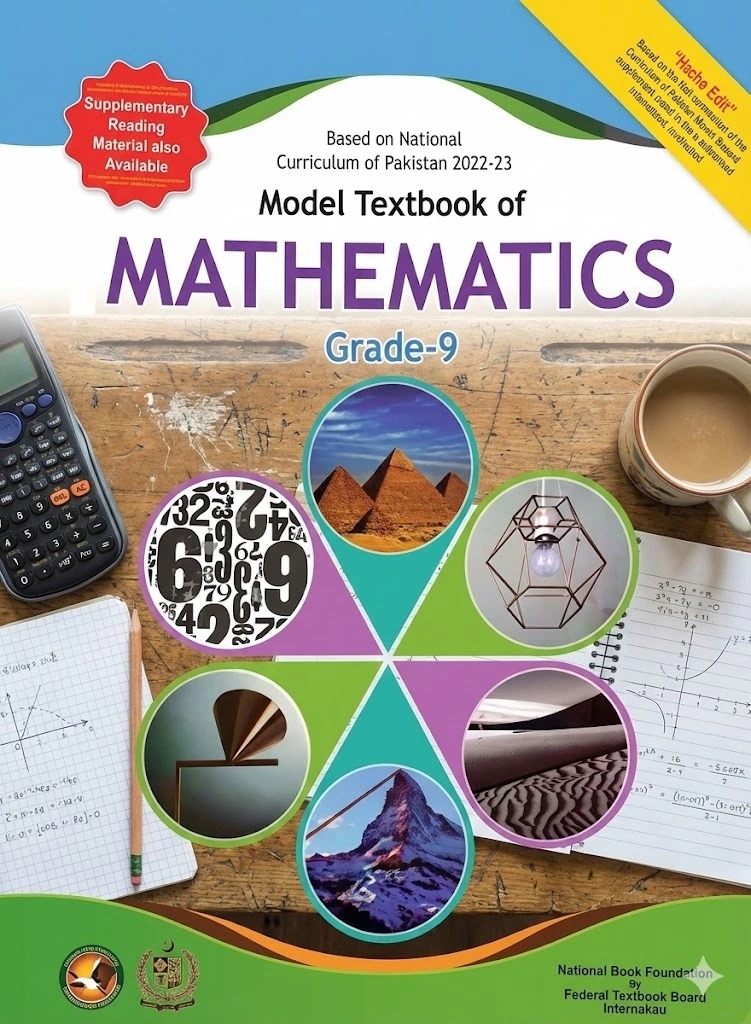
Mastery Guide: Sets and Relations — Set Operations, Venn Diagrams, Survey Inclusion-Exclusion, Cartesian Products & Binary Relations
Chapter 3: Sets and Relations
Mastery Guide • Set Operations • Venn Diagrams • Inclusion-Exclusion Principle • Cartesian Products • Binary Relations
1 Unit Overview & Learning Outcomes
In this unit, students explore mathematics as the foundational language of patterns, structures, and their relationships. From classifying observable universe galaxies to solving complex multi-variable demographic surveys and defining binary mappings, students master:
2 Conceptual Foundations of Sets
2.1 Rigorous Definition of a Set
A Set is a well-defined collection of distinct objects.
| Essential Criterion | Detailed Explanation | Comparative Examples |
|---|---|---|
| 1. Well-Defined | There exists an unambiguous, objective mathematical rule or criterion to decide conclusively whether any given element belongs ($\in$) or does not belong ($\notin$) to the set. |
✓ Set: "Stones weighing less than $1\text{ kg}$" ✗ Not a Set: "Lighter stones" (subjective) |
| 2. Distinct Objects | Each object in the set must be listed exactly once. Repetition of elements is strictly not allowed and does not alter the set. |
Letters in the word "sets" $\implies \{s, e, t\}$.Natural numbers among $3, -9, 2, 3, 4, 2 \implies \{2, 3, 4\}$. |
2.2 Mathematics as Patterns, Structures, and Relationships
Patterns allow us to predict unknown terms through functional rules. In structural geometry, square numbers represent the area of regular grid squares:
2.3 Standard Mathematical Sets of Numbers
| Symbol | Name of Number Set | Tabular / Set-Builder Representation |
|---|---|---|
| $\mathbb{N}$ | Natural Numbers | $\{1, 2, 3, 4, 5, \dots\}$ |
| $\mathbb{W}$ | Whole Numbers | $\{0, 1, 2, 3, 4, \dots\}$ |
| $\mathbb{Z}$ | Integers | $\{0, \pm 1, \pm 2, \pm 3, \dots\}$ |
| $\mathbb{E}$ | Even Integers | $\{0, \pm 2, \pm 4, \pm 6, \dots\}$ |
| $\mathbb{O}$ | Odd Integers | $\{\pm 1, \pm 3, \pm 5, \dots\}$ |
| $\mathbb{P}$ | Prime Numbers | $\{2, 3, 5, 7, 11, 13, 17, 19, \dots\}$ |
| $\mathbb{Q}$ | Rational Numbers | $\{ \frac{p}{q} \mid p, q \in \mathbb{Z} \land q \ne 0 \}$ |
| $\mathbb{Q}'$ | Irrational Numbers | $\{ x \mid x \ne \frac{p}{q}, p, q \in \mathbb{Z} \land q \ne 0 \}$ |
| $\mathbb{R}$ | Real Numbers | $\mathbb{Q} \cup \mathbb{Q}' = \{ x \mid x \in \mathbb{Q} \lor x \in \mathbb{Q}' \}$ |
Reason: The real numbers are uncountably infinite and dense (between any two distinct real numbers, there are infinitely many real numbers). Thus, elements cannot be enumerated sequentially one after another.
3 Fundamental Set Operations & Venn Diagram Configurations
Disjoint Sets ($A \cap B = \emptyset$)
No common elements: $A \cap B = \emptyset$. Circles do not touch.
Overlapping Sets ($A \cap B \ne \emptyset$)
Common region exists, neither is a subset of the other.
Nested Subset ($A \subseteq B$)
All elements of $A$ are contained in $B$: $A \subseteq B$.
3.1 Set Difference & Complements
Collection of all elements that belong to $A$ but do not belong to $B$:
A - B = { x | x ∈ A ∧ x ∉ B }
• Note: In general, $A - B \ne B - A$ (Non-commutative).
Collection of all elements in universal set $U$ that do not belong to $A$:
A' = U - A = { x | x ∈ U ∧ x ∉ A }
• Note: $A \cup A' = U$, $A \cap A' = \emptyset$, and $(A')' = A$.
4 Rigorous Laws of Set Operations
4.1 Associative Laws
2. Intersection: $(A \cap B) \cap C = A \cap (B \cap C)$
4.2 Distributive Laws
2. Intersection over Union: $A \cap (B \cup C) = (A \cap B) \cup (A \cap C)$
4.3 De Morgan's Laws
2. $(A \cap B)' = A' \cup B'$ • "The complement of an intersection is the union of the complements."
General 3-Set Venn Diagram (8 Mutually Disjoint Regions)
Every 3-set problem partitions the universe $U$ into exactly $2^3 = 8$ mutually disjoint regions.
5 Inclusion-Exclusion Principle (Survey Word Problems)
In real-world demographic and survey analysis, cardinalities $n(S)$ satisfy fundamental counting equations:
Two-Set Cardinality Formulas:
- Union Formula: $n(A \cup B) = n(A) + n(B) - n(A \cap B)$
- Intersection Formula: $n(A \cap B) = n(A) + n(B) - n(A \cup B)$
- Only $A$ (Difference): $n(A - B) = n(A) - n(A \cap B) = n(A \cup B) - n(B)$
- Disjoint Partition: $n(A \cup B) = n(A - B) + n(A \cap B) + n(B - A)$
- Neither $A$ nor $B$: $n((A \cup B)') = n(U) - n(A \cup B)$
Three-Set Cardinality Formula:
$$n(A \cup B \cup C) = n(A) + n(B) + n(C) - n(A \cap B) - n(B \cap C) - n(A \cap C) + n(A \cap B \cap C)$$
• Neither of the three: $n((A \cup B \cup C)') = n(U) - n(A \cup B \cup C)$.6 Cartesian Products, Binary Relations & Mappings
6.1 Ordered Pairs & Equality
An Ordered Pair $(a, b)$ consists of two elements where order is non-invertible ($(a, b) \ne (b, a)$ if $a \ne b$).
6.2 Cartesian Product $A \times B$
The Cartesian Product of two sets $A$ and $B$, denoted $A \times B$, is the set of all ordered pairs $(x, y)$ such that $x \in A$ and $y \in B$: $$A \times B = \{(x, y) \mid x \in A \land y \in B\}$$
- $n(A \times B) = n(A) \times n(B)$
- Total subsets of $A \times B = 2^{n(A \times B)}$
- $A \times B = \emptyset$ if $A = \emptyset$ or $B = \emptyset$
- $A \times B \ne B \times A$ (unless $A = B$ or one is $\emptyset$)
- $A \times (B \cup C) = (A \times B) \cup (A \times C)$
- $A \times (B \cap C) = (A \times B) \cap (A \times C)$
6.3 Binary Relation, Domain, Range & Inverse
- Binary Relation: Any subset $R \subseteq A \times B$ is called a binary relation from $A$ to $B$.
- Total Relations: If $n(A) = p$ and $n(B) = q$, the number of binary relations is $2^{p \times q}$.
- Domain $\text{Dom}(R)$: Set of all first elements of the ordered pairs in $R$: $$\text{Dom}(R) = \{ x \in A \mid (x, y) \in R \}$$
- Range $\text{Range}(R)$: Set of all second elements of the ordered pairs in $R$: $$\text{Range}(R) = \{ y \in B \mid (x, y) \in R \}$$
- Inverse Relation $R^{-1}$: Obtained by interchanging the coordinates of each ordered pair in $R$: $$R^{-1} = \{(y, x) \mid (x, y) \in R\} \subseteq B \times A$$ $$\text{Dom}(R^{-1}) = \text{Range}(R) \quad \text{and} \quad \text{Range}(R^{-1}) = \text{Dom}(R)$$
Arrow Diagram Representation of Relation $R: A \to B$
Relation $R = \{(a, b) \in A \times B \mid a > b\} = \{(1, 0), (2, 0), (2, 1), (3, 0), (3, 1)\}$.
3.1 Exercise 3.1 — Operations on Sets & Venn Diagram Verifications
7 Major Questions • Complete Visual ProofsQuestion 1: Shade Set Operations Across ALL 4 Textbook Configurations
Shade each of the four operations: (a) $A \cup (B \cap C)$, (b) $A \cap (B \cup C)$, (c) $(A \cup B) \cup C$, and (d) $A \cap (B \cap C)$ across all four distinct Venn diagram arrangements.
Configuration (i): Overlapping Sets $A$ and $B$, with $C$ Intersecting Both
Configuration (ii): Disjoint Sets $A$ and $B$, with $C$ Overlapping Both ($A \cap B = \emptyset$)
Configuration (iii): Three Mutually Overlapping Sets (Symmetric Triad)
Configuration (iv): Nested $B \subseteq A$ with Disjoint $C$ ($A \cap C = \emptyset, B \cap C = \emptyset$)
Question 2: Evaluations & Venn Diagram for $X = \{a, b, c, d, e\}$, $Y = \{a, c, e\}$, $Z = \{g, h, i, j\}$
• $X = \{a, b, c, d, e\}$
• $Y = \{a, c, e\}$ &implies; Note: $Y \subset X$ (Proper Subset)
• $Z = \{g, h, i, j\}$ &implies; Note: $Z \cap X = \emptyset$ (Disjoint)
Step-by-Step Evaluations:
(i) $(X \cup Y) \cup Z = \{a, b, c, d, e\} \cup \{g, h, i, j\} = \mathbf{\{a, b, c, d, e, g, h, i, j\}}$
(ii) $X \cup (Y \cup Z) = \{a, b, c, d, e\} \cup \{a, c, e, g, h, i, j\} = \mathbf{\{a, b, c, d, e, g, h, i, j\}}$
(iii) $(X \cap Y) \cap Z = \{a, c, e\} \cap \{g, h, i, j\} = \mathbf{\emptyset}$
(iv) $X \cap (Y \cap Z) = X \cap \emptyset = \mathbf{\emptyset}$
(v) $(X \cup Y) \cap Z = \{a, b, c, d, e\} \cap \{g, h, i, j\} = \mathbf{\emptyset}$
(vi) $(X \cap Y) \cup Z = \{a, c, e\} \cup \{g, h, i, j\} = \mathbf{\{a, c, e, g, h, i, j\}}$
Questions 3 & 4: Verification of Associative & Distributive Laws via Diagrams
Question 3: Associative Laws
• Union: Shading $(A \cup B) \cup C$ combines all 3 regions, which is visually identical to $A \cup (B \cup C)$.
• Intersection: Shading $(A \cap B) \cap C$ isolates the mutual common region, identically matching $A \cap (B \cap C)$.
Question 4: Distributive Laws
• Union over Intersection: $A \cup (B \cap C)$ shades all of $A$ and lens $B \cap C$, identically equal to $(A \cup B) \cap (A \cup C)$.
• Intersection over Union: $A \cap (B \cup C)$ shades the sections of $A$ inside $B$ or $C$, matching $(A \cap B) \cup (A \cap C)$.
Question 5: Proof of Associative Laws with Specific Element Sets & Diagrams
LHS: $(P \cup Q) \cup R = \{0, 1, 2, 3, 4, 5, 6\} \cup \{5, 6, 7, 8, 9\} = \{0, 1, 2, 3, 4, 5, 6, 7, 8, 9\}$
RHS: $P \cup (Q \cup R) = \{0, 1, 2, 3\} \cup \{2, 3, 4, 5, 6, 7, 8, 9\} = \{0, 1, 2, 3, 4, 5, 6, 7, 8, 9\}$
$\implies \text{LHS} = \text{RHS}$.
(b) Associative Law of Intersection: $(P \cap Q) \cap R = P \cap (Q \cap R)$
LHS: $(P \cap Q) \cap R = \{2, 3\} \cap \{5, 6, 7, 8, 9\} = \emptyset$
RHS: $P \cap (Q \cap R) = \{0, 1, 2, 3\} \cap \{5, 6\} = \emptyset$
$\implies \text{LHS} = \text{RHS} = \emptyset$.
• Intersection: $(P \cap Q) \cap R = \emptyset \cap R = \emptyset$; $P \cap (Q \cap R) = P \cap \{t, u\} = \emptyset$. $\implies \text{LHS} = \text{RHS} = \emptyset$.
Questions 6 & 7: Distributive Laws Proofs with Exact Element Venn Placement
Note: $X \subset Z$ and $Y \subset Z$, with $X \cap Y = \emptyset$.
LHS: $Y \cap Z = \{0, 1, 2, 3\}$. $X \cup (Y \cap Z) = \{-3, -2, -1, 0, 1, 2, 3\} = Z$.
RHS: $X \cup Y = \{-3, -2, -1, 0, 1, 2, 3\} = Z$; $X \cup Z = Z$. $Z \cap Z = Z$.
$\implies \text{LHS} = \text{RHS} = Z$. (Verified)
LHS: $Y \cup Z = \{a, b, e, g, l, n, r, y\}$. $X \cap (Y \cup Z) = \{a, e, i\} \cap \{a, b, e, g, l, n, r, y\} = \mathbf{\{a, e\}}$.
RHS: $X \cap Y = \{e\}$, $X \cap Z = \{a, e\}$. $(X \cap Y) \cup (X \cap Z) = \{e\} \cup \{a, e\} = \mathbf{\{a, e\}}$.
$\implies \text{LHS} = \text{RHS} = \{a, e\}$. (Verified)
3.2 Exercise 3.2 — Survey Word Problems & Inclusion-Exclusion
14 Complete Problems • Rich DiagramsQuestion 1: Cardinality of Intersection
Given: $n(A) = 24, n(B) = 18, n(A \cup B) = 31$. Find $n(A \cap B)$.
$$31 = 24 + 18 - n(A \cap B)$$ $$31 = 42 - n(A \cap B)$$ $$n(A \cap B) = 42 - 31 = 11$$
Question 2: Finding $n(B - A)$ and $n(B)$
Given: $n(A - B) = 23, n(A \cup B) = 44, n(A \cap B) = 2$.
$$n(A \cup B) = n(A - B) + n(A \cap B) + n(B - A)$$ $$44 = 23 + 2 + n(B - A) \implies 44 = 25 + n(B - A)$$ $$n(B - A) = 44 - 25 = 19$$ Step 2: Finding $n(B)$
$$n(B) = n(A \cap B) + n(B - A) = 2 + 19 = 21$$
Question 3: Algebra & Geometry Students Survey
In a group of 30 Mathematics students, 20 like Algebra and 15 like both Geometry and Algebra. Show the data by Venn diagram and find how many students like Geometry.
Let $A =$ Students who like Algebra, $G =$ Students who like Geometry.
Total $n(A \cup G) = 30$, $n(A) = 20$, $n(A \cap G) = 15$.
$$n(A \cup G) = n(A) + n(G) - n(A \cap G)$$ $$30 = 20 + n(G) - 15 \implies 30 = 5 + n(G)$$ $$n(G) = 30 - 5 = 25$$ Disjoint Regions:
• Algebra only $= n(A) - n(A \cap G) = 20 - 15 = 5$
• Both $= 15$
• Geometry only $= n(G) - n(A \cap G) = 25 - 15 = 10$
Question 4: Street Houses Survey (Lawns & Porches)
In a street of 50 houses, 25 houses have lawns, 32 houses have car porches, and 15 houses have both lawn and car porch. Show the data by Venn diagram. Find how many houses have neither lawn nor porch.
Union:
$$n(L \cup P) = n(L) + n(P) - n(L \cap P) = 25 + 32 - 15 = 42$$ Neither Lawn nor Porch:
$$n((L \cup P)') = n(U) - n(L \cup P) = 50 - 42 = 8$$ Disjoint breakdown: Lawn only $= 25-15=10$, Both $= 15$, Porch only $= 32-15=17$, Neither $= 8$.
Question 5: Survey of 940 Children (Disjoint Categories)
Question 6: ABC Dairy Ice Cream Poll
• (i) Only Mango: $n(M) - n(M \cap V) = 100 - 20 = \mathbf{80}$
• (ii) Only Vanilla: $n(V) - n(M \cap V) - n(C \cap V) = 90 - 20 - 14 = \mathbf{56}$
• (iii) Only Chocolate: $n(C) - n(C \cap V) = 40 - 14 = \mathbf{26}$
Question 7: University 200 Students (Laptops, Cell Phones, iPods)
Total $n(U) = 200$. $n(L) = 42, n(C) = 80, n(I) = 100$. Pairwise: $n(L \cap C) = 23, n(L \cap I) = 10, n(C \cap I) = 14$. All three: $n(L \cap C \cap I) = 8$.
• All three $= 8$
• $L \cap C$ only $= 23 - 8 = 15$
• $L \cap I$ only $= 10 - 8 = 2$
• $C \cap I$ only $= 14 - 8 = 6$
• Laptop only $= 42 - (15 + 2 + 8) = 17$
• Cell phone only $= 80 - (15 + 6 + 8) = 51$
• iPod only $= 100 - (2 + 6 + 8) = 84$
Answers:
(a) Only cell phone: $\mathbf{51}$
(b) None of the three: Total union $= 17 + 51 + 84 + 15 + 2 + 6 + 8 = 183$. None $= 200 - 183 = \mathbf{17}$.
(c) iPod and Laptop but not Cellphone: $n(L \cap I) - n(L \cap C \cap I) = 10 - 8 = \mathbf{2}$.
Questions 8 to 14: Direct Algebraic Resolutions
Total students $= n(B \cup T) = 350 + 280 - 150 = \mathbf{480}$.
$50 = 26 + n(C) - 8 \implies n(C) = 50 - 18 = \mathbf{32}$.
Both $= n(T \cap C) = 48 + 40 - 70 = \mathbf{18}$.
Either group $= n(S \cup A) = 46 + 50 = \mathbf{96}$.
• Arabic only $= 52 - 12 = \mathbf{40}$
• French only $= 112 - 12 = \mathbf{100}$
• Total group $= 40 + 12 + 100 = \mathbf{152}$.
(i) Story books only $= 360 - 150 = \mathbf{210}$
(ii) Activities only $= 170 - 150 = \mathbf{20}$
(iii) Total students $= 210 + 150 + 20 = \mathbf{380}$.
• Watch at least one $= 25+16+13-(4+7+8)+3 = \mathbf{38}$
• Watch none $= 60 - 38 = \mathbf{22}$.
3.3 Exercise 3.3 — Cartesian Products & Ordered Pairs
8 Major Questions • Complete Mathematical DerivationsQuestion 1: Find Values of Unknowns from Equality of Ordered Pairs
Fundamental Axiom of Ordered Pairs: Two ordered pairs $(u, v)$ and $(w, z)$ are equal if and only if their corresponding coordinates are identically equal: $$(u, v) = (w, z) \iff u = w \quad \text{and} \quad v = z$$
Question 2: Cartesian Products & Cardinality
Given: $A = \{1, 4, 8\}$ ($n(A) = 3$), $B = \{1, 0\}$ ($n(B) = 2$).
$\{(1,1), (1,0), (4,1), (4,0), (8,1), (8,0)\}$ • Cardinality: $n(A \times B) = 3 \times 2 = \mathbf{6}$
(ii) $B \times A$:
$\{(1,1), (1,4), (1,8), (0,1), (0,4), (0,8)\}$ • Cardinality: $n(B \times A) = 2 \times 3 = \mathbf{6}$
(iii) $A \times A$:
$\{(1,1), (1,4), (1,8), (4,1), (4,4), (4,8), (8,1), (8,4), (8,8)\}$ • Cardinality: $n(A \times A) = 3 \times 3 = \mathbf{9}$
(iv) $B \times B$:
$\{(1,1), (1,0), (0,1), (0,0)\}$ • Cardinality: $n(B \times B) = 2 \times 2 = \mathbf{4}$
Question 4: Inverse Extraction of Sets from Product Set
Given: $L \times M = \{(0, 2), (0, 3), (0, 4), (1, 2), (1, 3), (1, 4)\}$.
$L = \{0, 1\}$ • $n(L) = 2$
• Set $M$ (Set of Second Coordinates / Projections):
$M = \{2, 3, 4\}$ • $n(M) = 3$
• Reversed Product $M \times L$:
$M \times L = \{(2, 0), (2, 1), (3, 0), (3, 1), (4, 0), (4, 1)\}$
Note: $L \times M \ne M \times L$ (Non-commutativity of Cartesian Product).
Question 3: Graphical Representation of Cartesian Products on Coordinate Grid
Given Sets: $E = \{1, 3\}$, $F = \{4, 6, 8\}$. Plot the Cartesian products on 2D coordinate planes:
Questions 5 to 8: Distributive Laws of Cartesian Product & Arrow Diagrams
LHS: $B \cup C = \{2, 4, 6, 7\}$
$A \times (B \cup C) = \{(1,2), (1,4), (1,6), (1,7), (3,2), (3,4), (3,6), (3,7), (5,2), (5,4), (5,6), (5,7)\}$ (12 elements)
RHS: $A \times B = \{(1,2), (1,4), (3,2), (3,4), (5,2), (5,4)\}$
$A \times C = \{(1,6), (1,7), (3,6), (3,7), (5,6), (5,7)\}$
$(A \times B) \cup (A \times C) = \text{Union of all 12 pairs above}$.
LHS: $E \cap F = \{c\}$
$D \times (E \cap F) = \{(a, c), (e, c), (i, c)\}$ (3 elements)
RHS: $D \times E = \{(a,a), (a,c), (e,a), (e,c), (i,a), (i,c)\}$
$D \times F = \{(a,b), (a,c), (e,b), (e,c), (i,b), (i,c)\}$
$(D \times E) \cap (D \times F) = \{(a, c), (e, c), (i, c)\}$.
Part (i): $A \times (B - C) = (A \times B) - (A \times C)$
LHS: $B - C = \{1\} \implies A \times (B - C) = \{(1, 1), (2, 1)\}$.
RHS: $A \times B = \{(1,0), (1,1), (2,0), (2,1)\}$, $A \times C = \{(1,0), (1,2), (1,4), (2,0), (2,2), (2,4)\}$.
$(A \times B) - (A \times C) = \{(1, 1), (2, 1)\}$. ✓ LHS = RHS
Part (ii): $(A - B) \times C = (A \times C) - (B \times C)$
LHS: $A - B = \{2\} \implies (A - B) \times C = \{(2, 0), (2, 2), (2, 4)\}$.
RHS: $A \times C = \{(1,0), (1,2), (1,4), (2,0), (2,2), (2,4)\}$, $B \times C = \{(0,0), (0,2), (0,4), (1,0), (1,2), (1,4)\}$.
$(A \times C) - (B \times C) = \{(2, 0), (2, 2), (2, 4)\}$. ✓ LHS = RHS
3.4 Exercise 3.4 — Binary Relations, Domain, Range & Inverses
9 Complete Questions • Vector Arrow VisualizationsQuestion 1: Total Number of Possible Binary Relations
Formula: Total Relations from $A$ to $B$ $= 2^{n(A \times B)} = 2^{n(A) \times n(B)}$.
$n(A) = 2, n(B) = 3 \implies n(A \times B) = 2 \times 3 = 6$
$\text{Total relations} = 2^6 = \mathbf{64}$.
(ii) $n(C) = 7$ (Relations on $C$):
$n(C \times C) = 7 \times 7 = 49$
$\text{Total relations} = \mathbf{2^{49}}$.
(iii) $D = \{1, 3, 5\}$ (Relations on $D$):
$n(D) = 3 \implies n(D \times D) = 3 \times 3 = 9$
$\text{Total relations} = 2^9 = \mathbf{512}$.
Question 2: Complete Enumeration of All Binary Relations
$R_1 = \emptyset$,
$R_2 = \{(\sqrt{2}, \sqrt[3]{5})\}$, $R_3 = \{(\sqrt{3}, \sqrt[3]{5})\}$, $R_4 = \{(\sqrt{5}, \sqrt[3]{5})\}$,
$R_5 = \{(\sqrt{2}, \sqrt[3]{5}), (\sqrt{3}, \sqrt[3]{5})\}$, $R_6 = \{(\sqrt{2}, \sqrt[3]{5}), (\sqrt{5}, \sqrt[3]{5})\}$,
$R_7 = \{(\sqrt{3}, \sqrt[3]{5}), (\sqrt{5}, \sqrt[3]{5})\}$,
$R_8 = A \times B$.
(ii) $C = \{a, b\}, D = \{x\}$ ($2^2 = 4$ relations):
$R_1 = \emptyset$, $R_2 = \{(a, x)\}$, $R_3 = \{(b, x)\}$, $R_4 = \{(a, x), (b, x)\}$.
(iii) $D = \{5\}, E = \{1, 10\}$ ($2^2 = 4$ relations):
$R_1 = \emptyset$, $R_2 = \{(5, 1)\}$, $R_3 = \{(5, 10)\}$, $R_4 = \{(5, 1), (5, 10)\}$.
Question 3: Successor Relation on $A = \{1, 2, 3, 4, 5, 6\}$
Condition: $R = \{(x, y) \mid y = x + 1, \quad x, y \in A\}$
$R = \{(1, 2), (2, 3), (3, 4), (4, 5), (5, 6)\}$
(For $x = 6$, $y = 7 \notin A$, so $(6, 7) \notin R$)
• Domain: $\text{Dom}(R) = \{1, 2, 3, 4, 5\}$
• Range: $\text{Range}(R) = \{2, 3, 4, 5, 6\}$
• Inverse: $R^{-1} = \{(2, 1), (3, 2), (4, 3), (5, 4), (6, 5)\}$
Question 4: Binary Relations between $H$ and $G$
Given: $H = \{5, 6, 7, 8, 9\}$ and $G = \{5, 7, 9, 11\}$.
$R_1 = \{(5, 5), (7, 7), (9, 9)\}$
$\text{Dom} = \{5, 7, 9\}, \quad \text{Range} = \{5, 7, 9\}$
(ii) $R_2 = \{(x, y) \mid x < y\}$:
$R_2 = \{(5,7), (5,9), (5,11), (6,7), (6,9), (6,11), (7,9), (7,11), (8,9), (8,11), (9,11)\}$
(iii) $R_3 = \{(x, y) \mid x > y\}$:
$R_3 = \{(6,5), (7,5), (8,5), (8,7), (9,5), (9,7)\}$
(iv) $R_4 = \{(x, y) \mid y - x = 2\}$:
$R_4 = \{(5, 7), (7, 9), (9, 11)\}$
Question 5: Factor Relation & Arrow Diagram
$A = \{2, 3, 4, 5\}$, $B = \{4, 6, 8, 10\}$, $R = \{(x, y) \mid x \text{ divides } y\}$
• $\text{Dom}(R) = \{2, 3, 4, 5\}$, $\text{Range}(R) = \{4, 6, 8, 10\}$
• $R^{-1} = \{(4,2), (6,2), (8,2), (10,2), (6,3), (4,4), (8,4), (10,5)\}$
Question 6: Linear Form $y = 2x + 1$ on $A = \{1,2,3,4,5,6,7,8\}$
$R = \{(x, y) \mid y = 2x + 1, \quad x, y \in A\}$
• $x = 2 \implies y = 5 \in A$
• $x = 3 \implies y = 7 \in A$
• $x \ge 4 \implies y \ge 9 \notin A$
Relation: $R = \{(1, 3), (2, 5), (3, 7)\}$
• $\text{Dom}(R) = \{1, 2, 3\}$, $\text{Range}(R) = \{3, 5, 7\}$
• $R^{-1} = \{(3, 1), (5, 2), (7, 3)\}$
Questions 7, 8 & 9: Inverse Relations and Symmetric Properties
$R = \{(1, 5), (2, 4), (3, 3), (4, 2), (5, 1)\}$
• $\text{Dom}(R) = \{1, 2, 3, 4, 5\} = X$
• $\text{Range}(R) = \{1, 2, 3, 4, 5\} = X$
• $R^{-1} = \{(5, 1), (4, 2), (3, 3), (2, 4), (1, 5)\} = R$
$R = R^{-1}$ (Self-Inverse / Symmetric Relation)
$R = \{(1,2), (1,3), (1,4), (2,3), (2,4), (3,4)\}$
• $\text{Dom}(R) = \{1, 2, 3\}$
• $\text{Range}(R) = \{2, 3, 4\}$
• $R^{-1} = \{(2,1), (3,1), (4,1), (3,2), (4,2), (4,3)\} = \{(x,y) \mid x > y\}$
• $\text{Dom}(R^{-1}) = \{2, 3, 4\} = \text{Range}(R)$
• $\text{Range}(R^{-1}) = \{1, 2, 3\} = \text{Dom}(R)$
• $R^{-1} = \{(2, 1), (4, 2), (6, 3), (8, 4)\}$
• $\text{Dom}(R) = \{1, 2, 3, 4\}, \quad \text{Range}(R) = \{2, 4, 6, 8\}$
• $\text{Dom}(R^{-1}) = \{2, 4, 6, 8\} = \text{Range}(R)$
• $\text{Range}(R^{-1}) = \{1, 2, 3, 4\} = \text{Dom}(R)$
3.M Miscellaneous Exercise 3 — Comprehensive Chapter Review Solutions
11 MCQs + 8 Theoretical & Applied ProblemsQuestion 1: Multiple Choice Questions (With Rigorous Mathematical Rationale)
(a) $\{x \mid x \in A\}$ (b) $\{x \mid x \in A \land x \notin B\}$ (c) $\{x \mid x \in A \land x \in B\}$ (d) $\{x \mid x \in B\}$
✓ Correct Option: (b) • Rationale: By definition of relative complement/set difference, $A - B$ consists of elements in $A$ that do not belong to $B$.
(a) $B \subseteq A$ (b) $A \not\supseteq B$ (c) $A \supseteq B$ (d) $A \ne B$
✓ Correct Option: (a) / (c) • Rationale: $A \cup B = A \iff B \subseteq A \iff A \supseteq B$.
(a) $A$ (b) $B$ (c) $\emptyset$ (d) $B - A$
✓ Correct Option: (c) $\emptyset$ • Rationale: Every element of $A$ is in $B$, so no element remains in $A$ after removing elements of $B$.
(a) $A = B$ (b) $B \subseteq A$ (c) $A \subseteq B$ (d) all a, b & c
✓ Correct Option: (d) all a, b & c • Rationale: $A - B = \emptyset \implies A \subseteq B$, and $B - A = \emptyset \implies B \subseteq A$, which together imply $A = B$.
(a) infinite (b) null (c) universal (d) singleton
✓ Correct Option: (b) null set • Rationale: By law of complementation, $A \cap A' = \emptyset$.
(a) $\{1, 4\}$ (b) $\{2, 3\}$ (c) $\{1, 2, 3, 4\}$ (d) $\emptyset$
✓ Correct Option: (a) $\{1, 4\}$ • Rationale: Symmetric difference $A \Delta B = (A - B) \cup (B - A) = \{1\} \cup \{4\} = \{1, 4\}$.
(a) 5 (b) 6 (c) 8 (d) 9
✓ Correct Option: (b) 6 • Rationale: Cardinality product $n(A \times B) = n(A) \times n(B) = 3 \times 2 = 6$.
(a) $2^m$ (b) $m^2$ (c) $2^{m^2}$ (d) $2^{2m}$
✓ Correct Option: (c) $2^{m^2}$ • Rationale: $n(A \times A) = m \times m = m^2$, so power set has $2^{m^2}$ subsets.
(a) $\{1, 2, 3\}$ (b) $\{2, 3, 4\}$ (c) $\{1, 2, 3, 4\}$ (d) $\{1, 4\}$
✓ Correct Option: (a) $\{1, 2, 3\}$ • Rationale: Domain is the set of all first coordinates: $\{1, 2, 3\}$.
(a) $\{a, b, c\}$ (b) $\{1, 2, 3\}$ (c) $\{a, 1, b, 2, c, 3\}$ (d) $\{1, 3\}$
✓ Correct Option: (b) $\{1, 2, 3\}$ • Rationale: Range is the set of all second coordinates: $\{1, 2, 3\}$.
(a) $\{(1, 2), (2, 4)\}$ (b) $\{(2, 1), (4, 2)\}$ (c) $\{(1, 1), (2, 2)\}$ (d) $\{(2, 4), (1, 2)\}$
✓ Correct Option: (b) $\{(2, 1), (4, 2)\}$ • Rationale: $R = \{(1, 2), (2, 4)\} \implies R^{-1} = \{(2, 1), (4, 2)\}$.
Question 2: Fundamental Set Theory & Relation Definitions
Question 3: Venn Diagram Shading for 3-Set Operations
Visual verification of algebraic set operations using shaded region geometry:
Question 4: De Morgan's Laws Verification
$U = \{1, 2, 3, \dots, 10\}$, $A = \{2, 4, 6, 8, 10\}$, $B = \{1, 2, 3, 4, 5, 6\}$.
$A \cup B = \{1, 2, 3, 4, 5, 6, 8, 10\}$
$\text{LHS} = U - (A \cup B) = \{7, 9\}$
$A' = U - A = \{1, 3, 5, 7, 9\}$
$B' = U - B = \{7, 8, 9, 10\}$
$\text{RHS} = A' \cap B' = \{7, 9\}$
✓ LHS = RHS = $\{7, 9\}$
Part (ii): $(A \cap B)' = A' \cup B'$
$A \cap B = \{2, 4, 6\}$
$\text{LHS} = U - \{2, 4, 6\} = \{1, 3, 5, 7, 8, 9, 10\}$
$\text{RHS} = A' \cup B' = \{1, 3, 5, 7, 8, 9, 10\}$
✓ LHS = RHS (Verified)
Question 5: Distributive Laws Verification
$A = \{1, 2, 3, 4\}$, $B = \{2, 4, 6, 8\}$, $C = \{3, 4, 5, 6\}$.
$B \cap C = \{4, 6\}$
$\text{LHS} = A \cup \{4, 6\} = \{1, 2, 3, 4, 6\}$
$A \cup B = \{1, 2, 3, 4, 6, 8\}$, $A \cup C = \{1, 2, 3, 4, 5, 6\}$
$\text{RHS} = (A \cup B) \cap (A \cup C) = \{1, 2, 3, 4, 6\}$
✓ LHS = RHS
Part (ii): $A \cap (B \cup C) = (A \cap B) \cup (A \cap C)$
$B \cup C = \{2, 3, 4, 5, 6, 8\}$
$\text{LHS} = A \cap (B \cup C) = \{2, 3, 4\}$
$A \cap B = \{2, 4\}$, $A \cap C = \{3, 4\}$
$\text{RHS} = (A \cap B) \cup (A \cap C) = \{2, 3, 4\}$
✓ LHS = RHS
Questions 6 to 9: Applied Survey Demographics & Cartesian Relations
Total possible relations $= 2^6 = 64$.
Four specific relations:
• $R_1 = \{(a, 1), (b, 2)\} \implies \text{Dom}=\{a, b\}, \text{Range}=\{1, 2\}$
• $R_2 = \{(a, 3)\} \implies \text{Dom}=\{a\}, \text{Range}=\{3\}$
• $R_3 = \{(a, 2), (b, 3)\} \implies \text{Dom}=\{a, b\}, \text{Range}=\{2, 3\}$
• $R_4 = P \times Q \implies \text{Dom}=P, \text{Range}=Q$
(i) Read at least one newspaper:
$$n(E \cup U_r) = n(E) + n(U_r) - n(E \cap U_r) = 65 + 45 - 25 = \mathbf{85}$$ (ii) Read neither newspaper:
$$n((E \cup U_r)') = n(U) - n(E \cup U_r) = 100 - 85 = \mathbf{15}$$
Recite in at least one style:
$$n(H \cup W) = 6 + 5 - 3 = 8$$ Recite in neither style:
$$n((H \cup W)') = 10 - 8 = \mathbf{2}$$
(i) Passed at least one subject:
$$n(M \cup P \cup C) = (50+40+30) - (20+15+10) + 5 = 120 - 45 + 5 = \mathbf{80}$$ (ii) Failed all three subjects:
$$n((M \cup P \cup C)') = 100 - 80 = \mathbf{20}$$ (iii) Passed Mathematics only:
$$n(M_{\text{only}}) = 50 - (15 + 5 + 5) = \mathbf{25}$$
More Chapter Notes for Class 9 (FBISE)
MathematicsTest Your Knowledge on Chapter 3: Mastery Guide: Sets and Relations — Set Operations, Venn Diagrams, Survey Inclusion-Exclusion, Cartesian Products & Binary Relations
Practice textbook-aligned solved MCQs with instant answer feedback, step-by-step solutions, and timed test simulation.