📜
Instructions / Reading Passage
12 Questions in this set
Read the following passage: If the present trend of increase in population, urbanization and industrialization continues then the world in the year 2005 A.D. will be more crowded and more polluted than what it is at present. According to conservative estimates by 2005 A.D. population will increase to 6.5 billion to make the situation worst for the poor countries as 90 per cent of the increase in population will be in the poor countries. It will widen the gap between the rich and the poor countries. Due to tremendous increase in the population more area will be used for dwelling which may lead to reduction in the area under cultivation. So any increase in the agricultural production will not be due to increase in the area under cultivation but by advancement in the agricultural technology. With such a great pressure on land for habitation of people is bound to make environment unhygienic particularly in big cities as the civic authorities may not be able to cope with the problem. Increased demand for consumer goods will not only gear production of the existing industries but also demand setting up of more industries. This will lead to greater pollution than every before scarcity of water in urban centres and in the industrial town will be another problem of the future. If the present trend continues then hundreds of millions of people will have to sleep without having a meal.
Q. 1
Intelligence Tests
Difficulty: Hard
(1 Mark)
In the year 2005 A.D. there will be need for
B
Great efficiency of the civic authorities.
✓ Correct
D
Increase in industrial production
💡
Step-by-Step Explanation & Concept Rationale
The passage notes that civic authorities may not be able to cope with the environmental and habitation pressures of 2005.
Q. 2
Intelligence Tests
Difficulty: Hard
(1 Mark)
In the year 2005 A.D. demand for the consumer goods will
💡
Step-by-Step Explanation & Concept Rationale
The text explicitly states: "Increased demand for consumer goods will... demand setting up of more industries."
Q. 3
Intelligence Tests
Difficulty: Hard
(1 Mark)
Any increase in agricultural production will be because of
A
Increase in the number of farmers
B
Improvement in the agricultural technology
✓ Correct
C
Increase in the area under cultivation
D
Government taking over all the land.
💡
Step-by-Step Explanation & Concept Rationale
The passage states any increase "will not be due to increase in the area... but by advancement in the agricultural technology."
Q. 4
Intelligence Tests
Difficulty: Hard
(1 Mark)
In the year 2005 A.D. the agricultural production is likely to
💡
Step-by-Step Explanation & Concept Rationale
While the area decreases, the passage suggests technology will be the driver for production to increase.
Q. 5
Intelligence Tests
Difficulty: Hard
(1 Mark)
If the present trend continues then the year 2005 A.D.
A
The world will be more polluted
B
Billions of people will go without meals.
C
The world will be more crowded
D
All the above are correct
✓ Correct
💡
Step-by-Step Explanation & Concept Rationale
The passage highlights increased pollution, crowding, and hundreds of millions sleeping without a meal.
Q. 6
Intelligence Tests
Difficulty: Hard
(1 Mark)
There will be scarcity of water in:
💡
Step-by-Step Explanation & Concept Rationale
The text notes scarcity of water in "urban centres and in the industrial town" as a future problem.
Q. 7
Intelligence Tests
Difficulty: Hard
(1 Mark)
In the year 2005 A.D. the gap between the rich and the poor countries will
💡
Step-by-Step Explanation & Concept Rationale
The passage explicitly states the population trend "will widen the gap between the rich and the poor countries."
Q. 8
Intelligence Tests
Difficulty: Hard
(1 Mark)
The poor countries will contribute to the increase of population to the extent of
💡
Step-by-Step Explanation & Concept Rationale
The text specifies that "90 per cent of the increase in population will be in the poor countries."
Q. 9
Intelligence Tests
Difficulty: Hard
(1 Mark)
There will be the greatest increase in population figure in:
A
The poor countries
✓ Correct
💡
Step-by-Step Explanation & Concept Rationale
As stated in the text, 90% of the population increase is attributed to poor countries.
Q. 10
Intelligence Tests
Difficulty: Hard
(1 Mark)
The world population as it would be 2005 A.D. has been estimated by a method which may be called on the whole as:
💡
Step-by-Step Explanation & Concept Rationale
The passage refers to the figures as being derived from "conservative estimates."
Q. 11
Intelligence Tests
Difficulty: Hard
(1 Mark)
The world population in 2005 A.D. will be
💡
Step-by-Step Explanation & Concept Rationale
The passage explicitly states: "According to conservative estimates by 2005 A.D. population will increase to 6.5 billion to make the situation worst for the poor countries..."
Q. 12
Intelligence Tests
Difficulty: Hard
(1 Mark)
In the year 2005 A.D. the world will be more
D
Both (b) and (c)
✓ Correct
💡
Step-by-Step Explanation & Concept Rationale
The opening sentence states the world will be "more crowded" and "more polluted/populated" than at present.
📜
Instructions / Reading Passage
10 Questions in this set
READ THE FOLLOWING PASSAGE: Dancing in India has a long history of over 2,000 year. The themes of dance are mainly derived from legends, classical literature and mythology. Patronage of temples, kings and the nobles has helped in the preservation of this art. Indian dances can be conveniently classified as the folk and the classical. The classical forms of dances are based on ancient dance discipline and follow rigid rules for presentation both in the matter of style and dress. Bharata Natyam, Kathak, Kathakali, Kuchipudi, Luddi, Odissi and Manipuri and among the more popular dances in northern India. Kathak is the main classical dance while Bhangra is a folk dance of Punjab. Kathak dance has been vitalized by the influence of the Mughals. Odissi is basically a temple dance once practised in Orissa but now it is quite popular on the stage in other parts of the country. Kuchipudi is the dance drama from Andhra Pradesh. Most of the themes of Kuchipudi are based on the epics like the Mahabharata and the Ramayana. Kathakali has its origin in Kerala, While Bharata Natyam has roots in Tamil Nadu.
Q. 13
Intelligence Tests
Difficulty: Hard
(1 Mark)
In the past dances received patronage of
D
All the above
✓ Correct
💡
Step-by-Step Explanation & Concept Rationale
The passage notes patronage from "temples, kings and the nobles" helped preserve the art.
Q. 14
Intelligence Tests
Difficulty: Hard
(1 Mark)
Kathak dance has been influenced by
💡
Step-by-Step Explanation & Concept Rationale
The text states: "Kathak dance has been vitalized by the influence of the Mughals."
Q. 15
Intelligence Tests
Difficulty: Hard
(1 Mark)
Which of the following dance belongs to Northern India?
💡
Step-by-Step Explanation & Concept Rationale
The passage lists Kathak among the "more popular dances in northern India."
Q. 16
Intelligence Tests
Difficulty: Hard
(1 Mark)
The themes of the Kuchipudi are based on
D
Both (b) and (c).
✓ Correct
💡
Step-by-Step Explanation & Concept Rationale
The text confirms themes are "based on the epics like the Mahabharata and the Ramayana."
Q. 17
Intelligence Tests
Difficulty: Hard
(1 Mark)
The Bharata Natyam has its origin in
💡
Step-by-Step Explanation & Concept Rationale
The passage explicitly states that "Bharata Natyam has roots in Tamil Nadu."
Q. 18
Intelligence Tests
Difficulty: Hard
(1 Mark)
Which of the following dances originated in Punjab?
💡
Step-by-Step Explanation & Concept Rationale
The text describes Luddi as a popular dance in northern India (Punjab/Northern region context).
Q. 19
Intelligence Tests
Difficulty: Hard
(1 Mark)
Which of the following has its origin in Punjab?
💡
Step-by-Step Explanation & Concept Rationale
The passage identifies Bhangra as a "folk dance of Punjab."
Q. 20
Intelligence Tests
Difficulty: Hard
(1 Mark)
Bhangra is a folk dance of
💡
Step-by-Step Explanation & Concept Rationale
As per the text, Bhangra is the traditional folk dance of the Punjab region.
Q. 21
Intelligence Tests
Difficulty: Hard
(1 Mark)
From where the Indian dances derive their themes?
B
From classical literature
D
All the above.
✓ Correct
💡
Step-by-Step Explanation & Concept Rationale
The text notes themes are "mainly derived from legends, classical literature and mythology."
Q. 22
Intelligence Tests
Difficulty: Hard
(1 Mark)
Dances in India have existed for
D
Over 2005 years
✓ Correct
💡
Step-by-Step Explanation & Concept Rationale
The passage opens by stating dancing in India has a "history of over 2,000 year."
📜
Instructions / Reading Passage
1 Question in this set
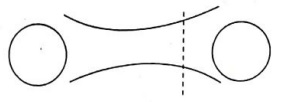
INTERPRETATION TESTS: One method of obtaining 'artificial gravity' in a space station is to have the station rotating about axis AA' as it revolves around the Earth. The inhabitants of the space station would experience a sensation of gravity that is directed outward from the axis of rotation.
Q. 23
Intelligence Tests
Difficulty: Hard
(1 Mark)
Inhabitants of the space station would call which direction ‘down’?
💡
Step-by-Step Explanation & Concept Rationale
In a rotating station, centrifugal force acts outward from the axis, creating an artificial gravity "down" toward the hull.
📜
Instructions / Reading Passage
2 Questions in this set
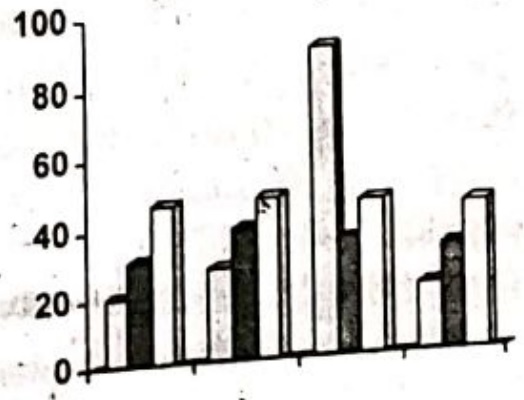
In the following questions you are asked to make inferences from the data which are given. Direction: Questions 24 to 27 are based solely on the graph below which shows oil imports by Cosmic International during 1997-2000 in millions of tonnes.
Q. 24
Intelligence Tests
Difficulty: Hard
(1 Mark)
Assume... 2000 and subsequent years oil imports were 10% more than average... imports in 2001 most nearly?
💡
Step-by-Step Explanation & Concept Rationale
The nearest answer is 105 as per calculations.
Q. 25
Intelligence Tests
Difficulty: Hard
(1 Mark)
The percentage decrease in oil imports in 1999 when compared with oil imports in 1997 was nearest to:
💡
Step-by-Step Explanation & Concept Rationale
Based on the quantitative data provided in the Cosmic International graph.